Nuovo album · Modern ClassicalNew album · Modern Classical
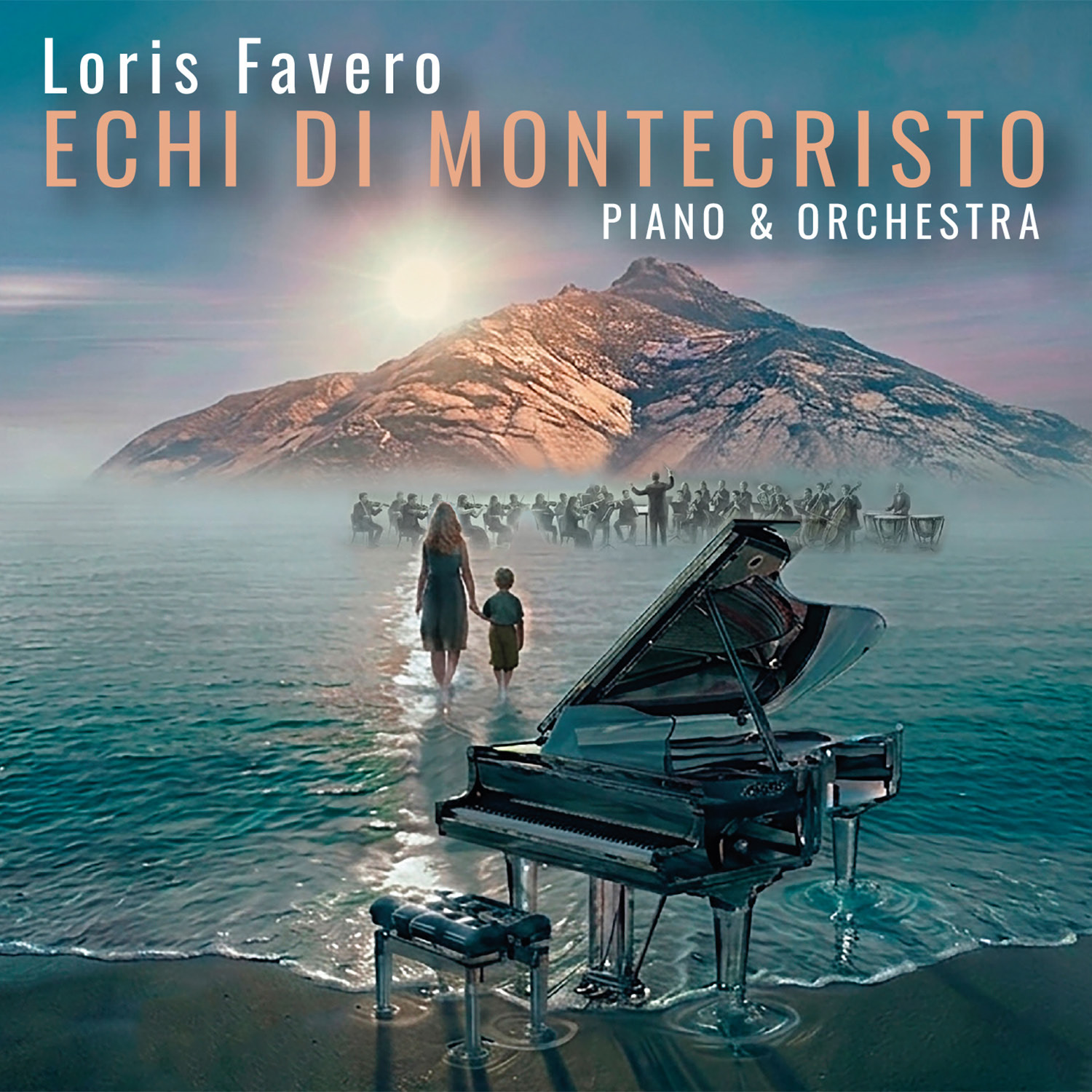
Echi di Montecristo
il silenzio di un'isola, la memoria di un padrethe silence of an island, the memory of a father
il silenzio di un'isola, la memoria di un padrethe silence of an island, the memory of a father
Esistono luoghi dove il silenzio non è vuoto, ma un peso che preme sul petto. Per Loris Favero, quel luogo è l'Isola di Montecristo.There are places where silence is not emptiness, but a weight pressing on the chest. For Loris Favero, that place is the Island of Montecristo.
Da quel silenzio, durato una vita, nasce Echi di Montecristo, l'opera d'esordio del pianista e compositore veneto: un disco che attraversa il trauma di un bambino costretto troppo presto a confrontarsi con l'assenza.From that lifelong silence comes Echi di Montecristo, the debut work of the Venetian pianist and composer: an album that traverses the trauma of a child forced to face absence far too soon.
Echi di Montecristo non descrive un paesaggio: lo attraversa. Il pianoforte diventa materia, spazio, distanza. Le composizioni si muovono tra tensione e sospensione, trasformando roccia, mare e vento in strutture musicali essenziali e immersive.Echi di Montecristo does not describe a landscape: it moves through it. The piano becomes matter, space, distance. The compositions shift between tension and suspension, turning rock, sea and wind into essential, immersive musical structures.
L'album ripercorre il periodo vissuto dall'autore sull'isola di Montecristo, un luogo tanto meraviglioso quanto inaccessibile, diventato nel tempo simbolo di una mancanza impossibile da colmare.The album retraces the time the author spent on the island of Montecristo, a place as wondrous as it is inaccessible, which over the years became the symbol of a loss impossible to fill.
«Non ho scritto questi brani, li ho estratti dalla pietra. Montecristo mi ha insegnato che la bellezza è crudele, perché resta immobile mentre noi andiamo in pezzi. In questi brani ho cercato di trasformare il granito dell'isola in melodia, e il rumore del mare nel dialogo che non ho mai potuto avere con mio padre.»“I did not write these pieces, I extracted them from the stone. Montecristo taught me that beauty is cruel, because it stands still while we fall apart. In these pieces I tried to turn the island's granite into melody, and the sound of the sea into the dialogue I could never have with my father.”
Dodici brani, un’isola, una storia solaTwelve tracks, one island, a single story
Montecristo è l’isola più chiusa del Mediterraneo: riserva naturale integrale dal 1971, poche centinaia di persone autorizzate a sbarcarci ogni anno, divieto assoluto di fermarsi a dormire. Un posto che quasi nessuno ha visto, e che tutti credono di conoscere per via di un romanzo.Montecristo is the most closed island in the Mediterranean: a strict nature reserve since 1971, only a few hundred people allowed ashore each year, with an absolute ban on staying overnight. A place almost no one has seen, and everyone believes they know because of a novel.
Echi di Montecristo la racconta attraverso gli occhi di un bambino rimasto senza padre, che ci arriva portandosi dietro un lutto. Dodici brani per pianoforte, orchestra, coro e violoncello, che funzionano come dodici capitoli: la partenza, lo stupore, il silenzio, la memoria, la scoperta.Echi di Montecristo tells it through the eyes of a boy left without a father, who arrives carrying his grief. Twelve pieces for piano, orchestra, choir and cello that work like twelve chapters: the departure, the wonder, the silence, the memory, the discovery.
Si può ascoltare come un disco strumentale. Oppure seguirlo dall’inizio alla fine, come si guarda una serie.You can listen to it as an instrumental record. Or follow it from beginning to end, the way you watch a series.
Un bambino parte con la madre. Dietro di lui una casa vuota, davanti un nome che non ha mai sentito.
Viaggio comincia dove finisce tutto il resto. I primi minuti sono paura allo stato puro: il distacco, l’ignoto, il rumore dello scafo che taglia l’acqua. Poi il mare fa quello che ha sempre fatto, sposta le cose. I contrasti musicali si allargano, i timbri si aprono all’aria salmastra, e all’orizzonte compaiono le guglie dell’isola come i bastioni di un castello.
Il dolore non sparisce. Cambia direzione. Da qui in poi la paura comincia a chiamarsi curiosità.
A boy sets out with his mother. Behind him an empty house, ahead a name he has never heard.
Viaggio begins where everything else ends. The first minutes are pure fear: the separation, the unknown, the sound of the hull cutting through the water. Then the sea does what it has always done — it moves things. The musical contrasts widen, the timbres open to the salt air, and on the horizon the island’s spires appear like the ramparts of a castle.
The grief does not disappear. It changes direction. From here on, fear begins to call itself curiosity.
Pianoforte solo. Nessuna parola, perché non ce ne sono.
Il bambino tocca terra e la natura gli toglie la voce. Racconta tutto la tastiera, da sola: prima in punta di dita, quasi trattenendo il respiro, poi in ondate che travolgono.
Per qualche minuto il lutto arretra. Non guarisce, arretra. L’isola non consola nessuno: si limita a fare spazio, e in quello spazio si torna a respirare.
È il primo incontro vero con Montecristo. Non un luogo sconosciuto, ma una presenza.
Solo piano. No words, because there are none.
The boy steps ashore and nature takes his voice away. The keyboard tells it all, alone: first on fingertips, almost holding its breath, then in waves that overwhelm.
For a few minutes the grief recedes. It does not heal — it recedes. The island consoles no one: it simply makes room, and in that room you breathe again.
It is the first true encounter with Montecristo. Not an unknown place, but a presence.
Dieci giorni senza dire una parola.
La bellezza non basta. Montecristo è tutta intorno a lui, ma il padre non c’è, e il bambino smette di parlare.
Il brano è la musica di quel mutismo: scrittura minimalista, pianoforte quasi nudo, orchestrazione ridotta a un filo. Poche note, molte pause. Lo spazio fra un suono e l’altro pesa quanto i suoni.
Non spiega il dolore e non lo risolve. Lo lascia stare lì. A tratti somiglia a una preghiera, a tratti a puro sconforto. Qui il silenzio non è assenza di musica: è la musica.
Ten days without saying a word.
Beauty is not enough. Montecristo is all around him, but his father is not there, and the boy stops speaking.
The piece is the music of that silence: minimalist writing, an almost bare piano, orchestration reduced to a thread. Few notes, many pauses. The space between one sound and the next weighs as much as the sounds.
It does not explain the grief and does not resolve it. It lets it be. At times it resembles a prayer, at times pure despair. Here silence is not the absence of music: it is the music.
Un salone vuoto che ricorda ancora le sue feste.
Pianoforte solo, scrittura apertamente romantica: candelabri, ricevimenti, gran galà ottocenteschi. Ma la villa, oggi, è un guscio affacciato su Cala Maestra — e la musica lo sa.
Sotto l’eleganza scorre qualcosa di più raccolto, quasi sacrale: la sensazione di attraversare una stanza in cui qualcuno ha ballato duecento anni fa e nessuno ha più spento la luce.
Non è ricostruzione storica. È una casa abitata dai propri ricordi, raccontata da una tastiera.
An empty ballroom that still remembers its parties.
Solo piano, openly romantic writing: candelabra, receptions, nineteenth-century galas. But the villa, today, is a shell overlooking Cala Maestra — and the music knows it.
Beneath the elegance runs something more intimate, almost sacred: the feeling of crossing a room where someone danced two hundred years ago and no one ever turned off the light.
It is not historical reconstruction. It is a house inhabited by its own memories, told by a keyboard.
Una campanella, un coro medievale e un pianoforte di oggi. Nessuno dei tre dovrebbe trovarsi nella stessa realtà.
Il brano nasce fra le rocce, dove il silenzio contemporaneo conserva l’eco di una storia molto più antica. Una campanella solitaria apre la porta; entra una monodia di ispirazione gregoriana; risponde il pianoforte, che parla un’altra lingua e un altro secolo.
Il cuore del pezzo è questo cortocircuito: due epoche che si ascoltano a vicenda invece di sovrapporsi. Poi l’orchestra le raccoglie entrambe e le spinge verso l’alto, fino a una grande invocazione corale.
Alla fine anche la pietra canta le preghiere che ha assorbito.
A small bell, a medieval choir and a piano of today. None of the three should exist in the same reality.
The piece is born among the rocks, where today’s silence preserves the echo of a much older story. A lone bell opens the door; a Gregorian-inspired monody enters; the piano answers, speaking another language and another century.
The heart of the piece is this short circuit: two eras listening to each other instead of overlapping. Then the orchestra gathers them both and pushes them upward, to a great choral invocation.
In the end even the stone sings the prayers it has absorbed.
Cerchi una faccia nell’acqua e per un istante la trovi davvero.
Il bambino guarda l’orizzonte e nelle increspature riconosce i tratti del padre. Dura un secondo, ma basta a innescare un richiamo che non si ferma più.
Il pianoforte tiene la parte fragile, quella che sussurra. L’orchestra la prende e la allarga, finché la ricerca di un singolo bambino diventa quella di chiunque abbia perso qualcuno.
È una conversazione con una persona che non può rispondere. Si fa lo stesso.
You look for a face in the water and for an instant you truly find it.
The boy watches the horizon and in the ripples recognises his father’s features. It lasts a second, but it is enough to set off a call that never stops.
The piano holds the fragile part, the one that whispers. The orchestra takes it and widens it, until one boy’s search becomes that of anyone who has lost someone.
It is a conversation with someone who cannot answer. You have it anyway.
Ritratto a due facce: la carezza e il granito.
Pianoforte solo, e un’umore che non si decide. Da una parte i paesaggi morbidi, dall’altra la roccia scolpita dal vento. La scrittura alterna trame armoniche fitte a passaggi rarefatti: chiaroscuri continui, come nuvole che passano su una parete verticale.
La tastiera riesce a fare entrambe le cose, il respiro del mare e il peso della pietra, la contemplazione e l’asprezza.
Non è una cartolina: è il carattere di Montecristo, la sua forza primordiale.
A two-sided portrait: the caress and the granite.
Solo piano, and a mood that cannot make up its mind. On one side the soft landscapes, on the other the rock carved by the wind. The writing alternates dense harmonic textures with rarefied passages: continuous chiaroscuro, like clouds passing over a vertical wall.
The keyboard manages to do both — the breath of the sea and the weight of the stone, contemplation and harshness.
It is not a postcard: it is the character of Montecristo, its primordial force.
Stesso posto, stessa ora, ogni sera. L’unico appuntamento fisso dell’isola.
Il brano nasce da un rituale privato dell’autore: aspettare che il sole scompaia dietro l’acqua, dall’unico approdo dell’isola.
La melodia segue il cambio di luce con una scrittura fluida che si assottiglia frase dopo frase, come il colore che si ritira dall’orizzonte. Niente si impone, tutto si allontana.
Qui il paesaggio non si guarda: si ascolta. Sono i minuti in cui Montecristo trattiene il fiato prima della notte.
Same place, same hour, every evening. The island’s only fixed appointment.
The piece comes from a private ritual of the composer: waiting for the sun to disappear behind the water, from the island’s only landing place.
The melody follows the changing light with fluid writing that thins out phrase after phrase, like colour withdrawing from the horizon. Nothing imposes itself; everything drifts away.
Here the landscape is not watched: it is listened to. These are the minutes when Montecristo holds its breath before the night.
Un fiore giallo che valeva più dell’oro, almeno secondo un bambino.
L’elicriso cresce ovunque, sull’isola. Nel gioco dell’infanzia diventava monete, tesori, regali da mettere via.
Da quel ricordo nasce il dialogo più intimo dell’intero progetto. Il pianoforte è la voce del bambino; il violoncello solo è quella del padre — una voce che non può più rispondere e che continua comunque a suonare. I due strumenti si cercano in bilico fra ciò che è stato e ciò che si continua a cercare.
L’orchestra li avvolge in una luce quasi fiabesca e la malinconia, poco per volta, si schiarisce.
Un tributo al padre, e al superpotere dell’infanzia: trasformare un fiore in un tesoro e un ricordo in una presenza.
A yellow flower worth more than gold — at least according to a child.
Helichrysum grows everywhere on the island. In childhood games it became coins, treasures, gifts to put away.
From that memory comes the most intimate dialogue of the whole project. The piano is the boy’s voice; the solo cello is the father’s — a voice that can no longer answer and yet keeps playing. The two instruments seek each other, poised between what was and what one keeps searching for.
The orchestra wraps them in an almost fairy-tale light and the melancholy, little by little, brightens.
A tribute to the father, and to childhood’s superpower: turning a flower into a treasure and a memory into a presence.
Un bambino, un orizzonte, e nessuna proporzione tra i due.
Seduto su un’altura, guarda il mare finché non ci sparisce dentro. È proprio la sproporzione a far nascere una domanda che nessuno gli ha insegnato a formulare: quanto è grande tutto questo, e io dove sto?
Il pianoforte solo regge la vertigine con melodie rade, quasi trattenute. Non descrive il panorama: descrive chi lo sta guardando in silenzio.
Una riflessione sull’infinito con gli occhi di chi ha quattro anni, spaventata e felice nello stesso momento.
A boy, a horizon, and no proportion between the two.
Sitting on a height, he watches the sea until he disappears into it. It is precisely the disproportion that raises a question no one taught him to ask: how big is all this, and where do I stand?
The solo piano holds the vertigo with sparse, almost restrained melodies. It does not describe the view: it describes the one watching it in silence.
A reflection on the infinite through the eyes of a four-year-old, frightened and happy at the same time.
Sdraiarsi per terra e guardare i rami muoversi.
Un bambino disteso, il viso verso l’alto. Sopra di lui l’azzurro del cielo e quello del mare si confondono, mentre le fronde dei lecci ridisegnano la stessa figura mille volte.
La scrittura pianistica utilizza il contrasto fra il tempo binario e quello ternario: due andature che non vanno d’accordo, esattamente come i rami e le onde. L’ostinato gira in circolo e la danza delle fronde diventa struttura ritmica.
Un paesaggio che restituisce lo sguardo di chi lo osserva. Luce, vento e movimento sono trasformati in materia musicale.
Lying on the ground, watching the branches move.
A boy stretched out, face upward. Above him the blue of the sky and the blue of the sea blur together, while the holm-oak boughs redraw the same figure a thousand times.
The piano writing plays on the contrast between binary and ternary time: two gaits that do not agree, exactly like the branches and the waves. The ostinato circles round and the dance of the boughs becomes rhythmic structure.
A landscape that returns the gaze of whoever observes it. Light, wind and movement turned into musical matter.
Il tesoro c’è davvero. Non è nello scrigno.
Il mito letterario dice che a Montecristo è nascosta una fortuna. Questo brano si mette a cercarla sul serio: l’orchestra costruisce un percorso sinfonico fatto di slanci, tensioni e virtuosismo, la febbre della caccia, il fascino di ciò che non si trova.
Poi, di colpo, tutto si apre. E quello che resta è la luce, il silenzio, la solitudine, il paesaggio.
Il viaggio finisce con una scoperta che ribalta il mito: il tesoro non è qualcosa da portare via, è qualcosa da attraversare.
The treasure is real. It is not in the chest.
Literary myth says a fortune is hidden on Montecristo. This piece sets out to look for it in earnest: the orchestra builds a symphonic path of surges, tensions and virtuosity — the fever of the hunt, the lure of what cannot be found.
Then, suddenly, everything opens. And what remains is the light, the silence, the solitude, the landscape.
The journey ends with a discovery that overturns the myth: the treasure is not something to carry away, it is something to pass through.
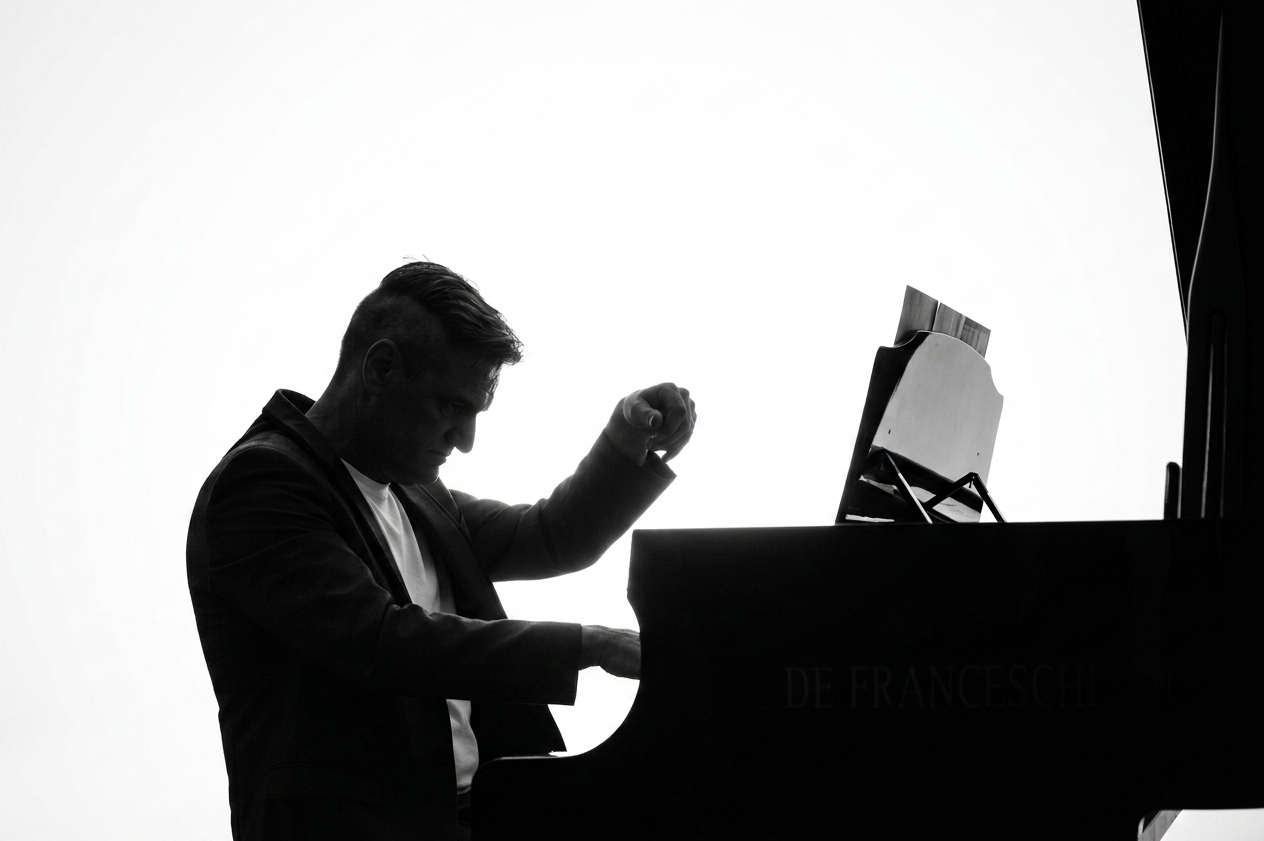
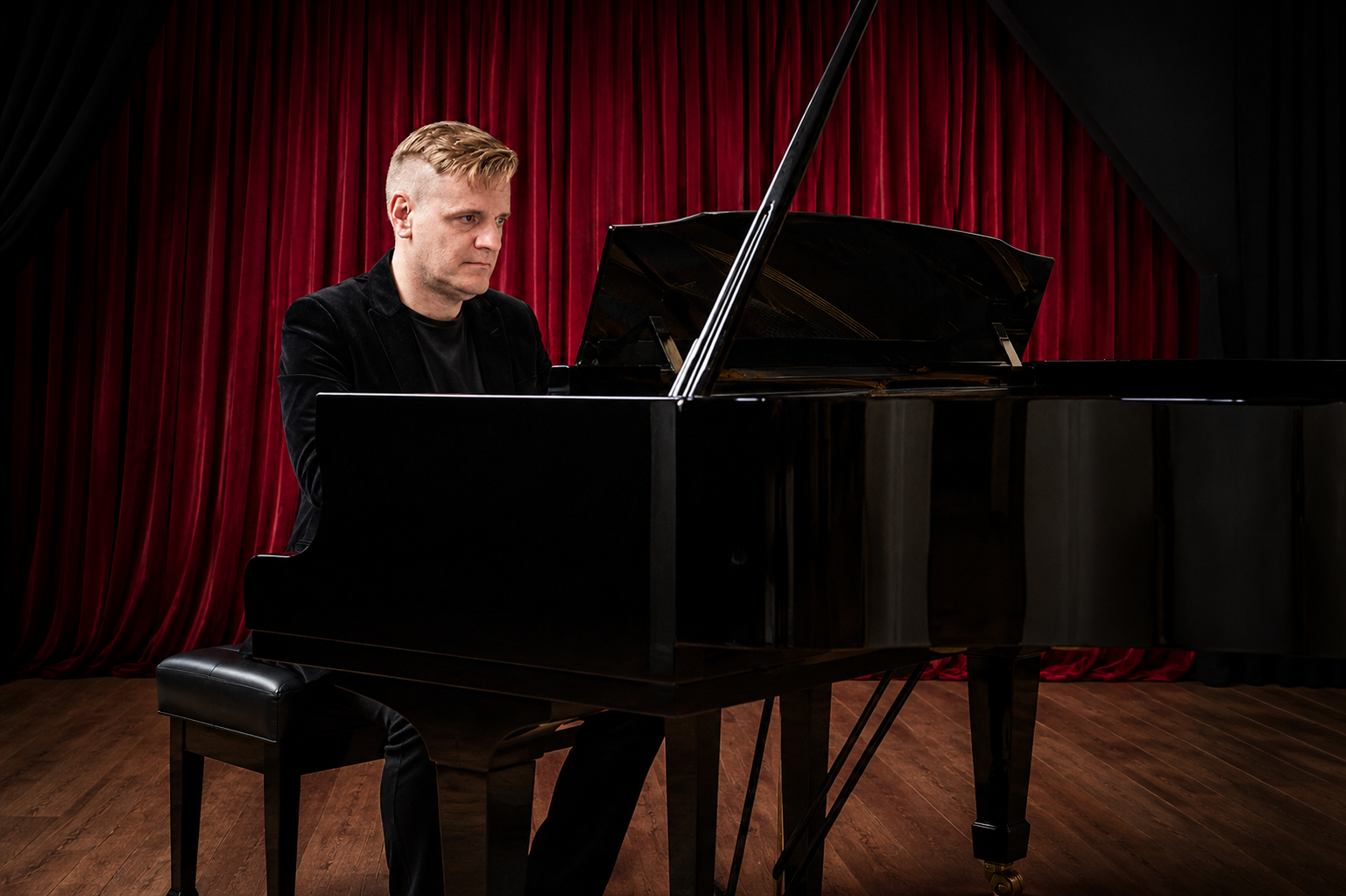
Loris Favero è un pianista e compositore italiano la cui ricerca musicale unisce linguaggio classico contemporaneo, paesaggio sonoro e narrazione emotiva.Loris Favero is an Italian pianist and composer whose musical research combines contemporary classical language, soundscape and emotional storytelling.
Formatosi presso il Conservatorio A. Steffani di Castelfranco Veneto, ha consolidato la propria visione musicale collaborando come pianista con Rondò Veneziano, esperienza che ha influenzato profondamente la sua capacità di fondere tradizione e contemporaneità.Trained at the A. Steffani Conservatory in Castelfranco Veneto, he refined his musical vision working as a pianist with Rondò Veneziano, an experience that deeply shaped his ability to blend tradition and modernity.
Con Echi di Montecristo, Favero realizza un lavoro profondamente personale in cui il pianoforte diventa spazio di memoria, silenzio e trasformazione.With Echi di Montecristo, Favero delivers a deeply personal work in which the piano becomes a space of memory, silence and transformation.
Progetto realizzato con il contributo di NUOVO IMAIE — Bando Nuove Produzioni 2025–2026.Project realised with the support of NUOVO IMAIE — Nuove Produzioni Grant 2025–2026.